The coco-de-mer permit: what it actually protects
By Dr. Frauke Fleischer-Dogley
CEO, Seychelles Islands Foundation
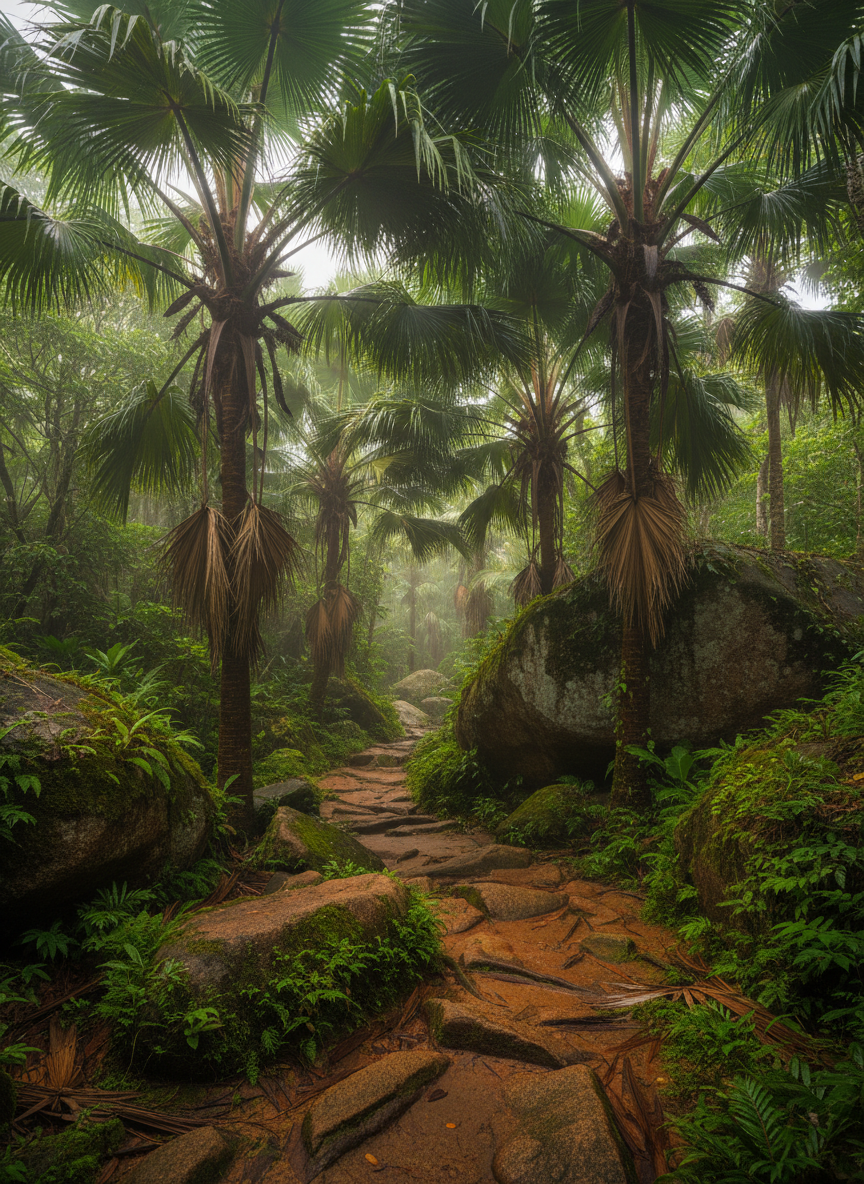
The coco-de-mer palm produces the world's largest seed. A mature double coconut can weigh up to twenty-five kilograms. It takes seven years to germinate and forty years to reach reproductive maturity. There are approximately 8,000 mature specimens remaining in the wild, almost all of them in the Vallée de Mai on Praslin and the Fond Ferdinand reserve.
A permit-stamped coco-de-mer nut is a souvenir sold across the Seychelles. The permit — a small metal tag embedded in the husk — is what makes the export legal. Without it, the nut cannot leave the country. With it, it represents something the permit system was designed to protect.
The permit system was introduced in 1995, following decades of uncontrolled export that had reduced the wild population to a fraction of its historical size. The system is administered by the Seychelles Islands Foundation, which controls access to both the Vallée de Mai and Aldabra — the two UNESCO World Heritage Sites in Seychelles.
Each nut sold on the open market is traced to a specific palm. The SIF monitors every bearing palm in the Vallée de Mai individually — over 4,000 trees, each with its own number and fruiting record. When a nut drops, it is collected, its origin recorded, and it enters either the natural regeneration programme (planted in designated areas) or the commercial stock (permitted for export).
The revenue from permitted nuts finances the SIF's monitoring operations, the warden salaries, and the habitat management programme. In 2024, permit revenue covered approximately forty percent of SIF's operating budget. The rest comes from conservation grants and the entrance fees paid by visitors to the Vallée de Mai.
When you buy a permitted coco-de-mer, you are not buying a souvenir. You are funding the operational infrastructure of the only management system that stands between this species and irreversible decline.
*Koko maron* — the coconut of the sea. A name given by sailors who found it floating in the ocean and could not identify its origin. They thought it grew underwater.
A note on language
«Koko maron»— the coco-de-mer — literally, the coconut of the sea