The Islands
Fregate
The feel of it
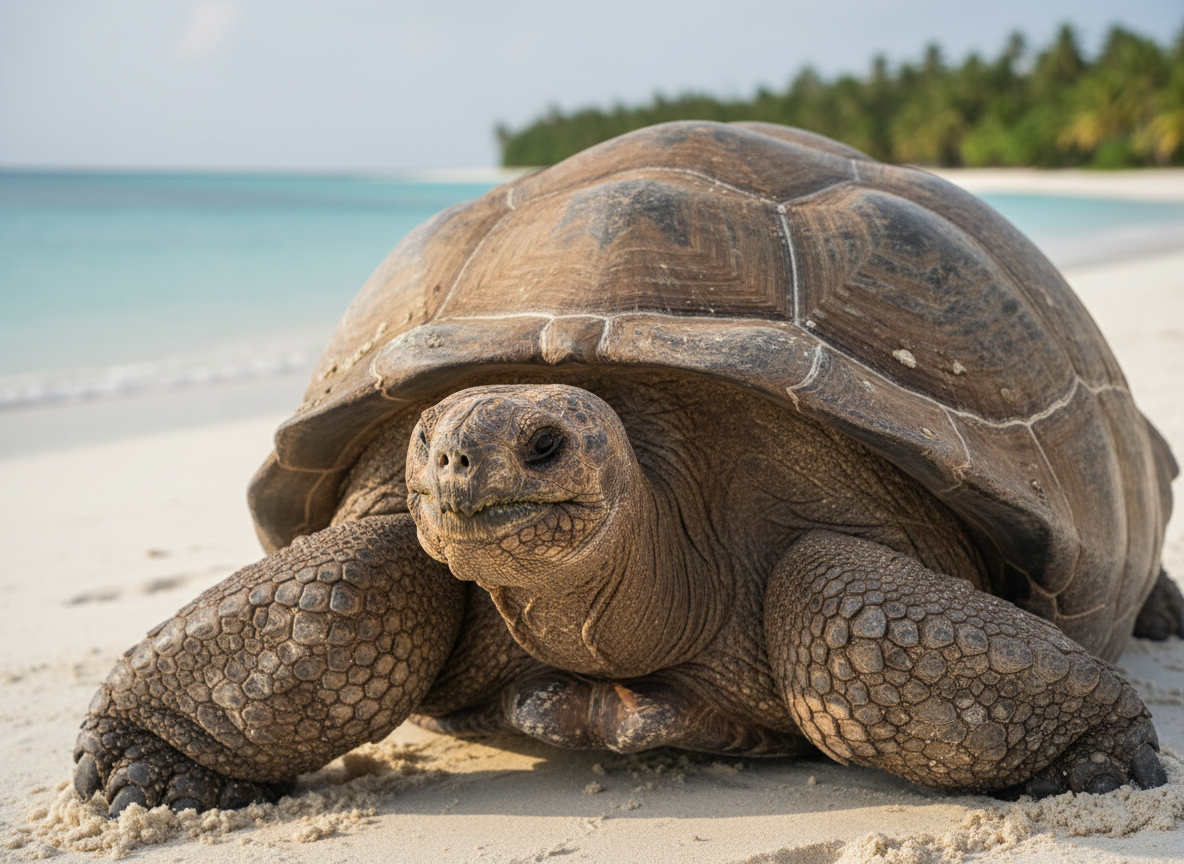
Fregate Island Private is the island we recommend to guests who want to be genuinely involved in something — not as spectators of a conservation project, but as participants in a living ecology that is being actively restored and monitored. The tortoises move across the resort grounds with the confidence of residents who predate the villas by several decades. They do. Three thousand five hundred giant Aldabra tortoises live wild on 55 hectares. The density is not crowding — the island accommodates them with the ease of an ecosystem that has had time to find its equilibrium.
The conservation programme on Fregate is among the most rigorous in the Seychelles. In 2000, following a complete rat eradication that took eighteen months and required the temporary removal of every tortoise, every gecko, and every bird that could be caught, the native forest began to recover. It now covers 70% of the island. Eight endemic bird species have returned, including the Seychelles magpie-robin — once one of the most endangered birds on earth, with fewer than fifteen individuals remaining — which now breeds on the island in stable numbers.
The five beaches on Fregate are private in a way that even the word private struggles to capture. Anse Victorin, on the island's southeastern point, has been ranked among the finest beaches in the world by multiple independent travel surveys conducted over multiple decades. The water is deep enough to dive from the shore, the coral starts immediately, and the hawksbill turtles nest here between October and February.
Sixteen villas. A cliff-top restaurant with an uninterrupted view of the sea. A conservation team that checks you in and monitors the reef with equal seriousness. Fregate is not for guests who want to relax in the conventional sense. It is for guests who understand that the most restorative places on earth are the ones that are still working at something.
Size
55 hectares
Geology
Granitic
Best season
October–May
How to reach
15 min helicopter from Mahé
In depth
Understanding Fregate
History
Fregate — named by early sailors after the frigatebirds that nest here in large numbers — was used as a provisioning stop by Indian Ocean traders from the seventeenth century and later farmed for copra under colonial administration. By the mid-twentieth century the island had been largely denuded of its native forest and its endemic fauna suppressed by introduced rats and cats. In the 1990s, a German entrepreneur purchased the island with the intention of developing a private resort, and in 2000 undertook one of the most dramatic conservation interventions in Indian Ocean history: a complete island-wide rat eradication programme, conducted over eighteen months, that required the temporary removal of all tortoises, geckos, and birds that could be captured. The eradication was successful. The native forest recovery that followed has been documented and studied by conservation organisations worldwide. The resort opened in its current form in 2001 and has operated as a model of integrated conservation-tourism ever since.
What to do — by appetite
Sea
- Outer reef diving — drop-off, pelagic, hard coral
- Rock pool snorkelling at Anse Macquereau
- Deep-sea fishing off the island's eastern shelf
Land
- Giant tortoise walk with the conservation manager — 3,500 animals on 55 hectares
- Rock climbing to Fregate's highest point at sunset
- Native forest walk — mahogany, fig, wild coffee
Culture
- Conservation morning — bird monitoring or tree planting
- Private dinner at the cliff-top restaurant
- Creole cooking with the resort's culinary team
Endemic species & notable ecology
- Seychelles magpie-robin
- Giant Aldabra tortoise (3,500+)
- Seychelles warbler
- Hawksbill turtle (nesting)
Begin a conversation about Fregate.
Begin a conversation